Understanding Roof Restoration and Replacement
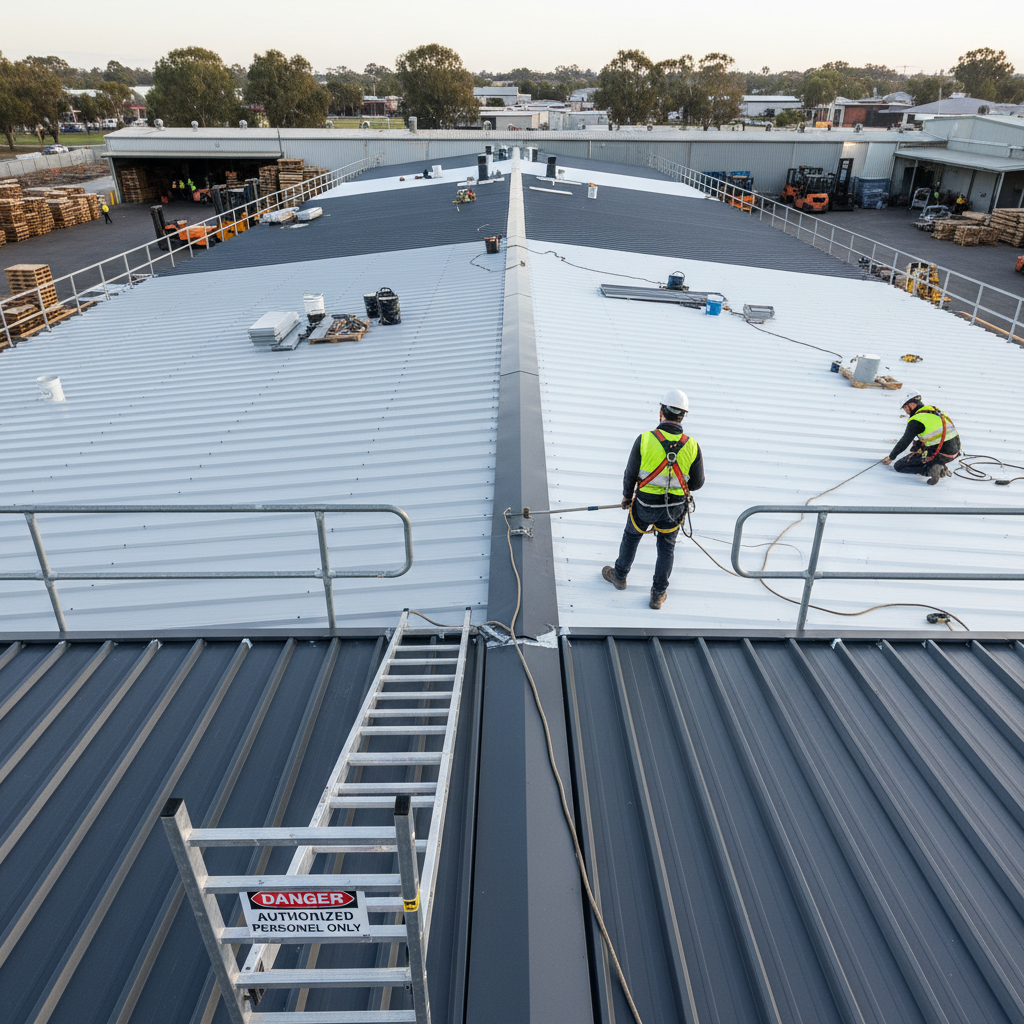
Roof restoration describes a process where worn or aged roofing materials are refurbished, not replaced. For commercial flat roofing systems, this often involves roof cleaning, repairs for roof leaks, and applying a protective coating system. Commercial roof restoration uses roof coating systems like acrylic coating system, reflective roof coatings, and high-performance roof coating. Specific approaches include fluid-applied roof restoration and spray foam roofing with polyurethane foam to create a seamless, monolithic commercial roof coatings layer. Surface preparation, seam & flashing reinforcement, and attention to expansion joints matter greatly. Silicon sealants may be used at critical points. roof assessment and inspection & assessment are essential at the start to gauge structural integrity and check for water infiltration, ponding water, water damage, moss and algae growth, insulation issues, and maintenance issue.
Roof replacement, meanwhile, means removing the entire roof and installing a new system. This could be a metal roofing upgrade, such as COLORBOND®, or other systems like modified bitumen, single-ply membranes, or a single-ply flat roof for energy efficiency. New roof decks may be installed if structural damage is present. Roofing contractors manage the full roof replacement process and ensure compliance with safety codes during installation. Both options can be applied to commercial buildings but differ considerably in labour costs, waste, and disruption.
Cost Comparison: Restoration vs. Replacement
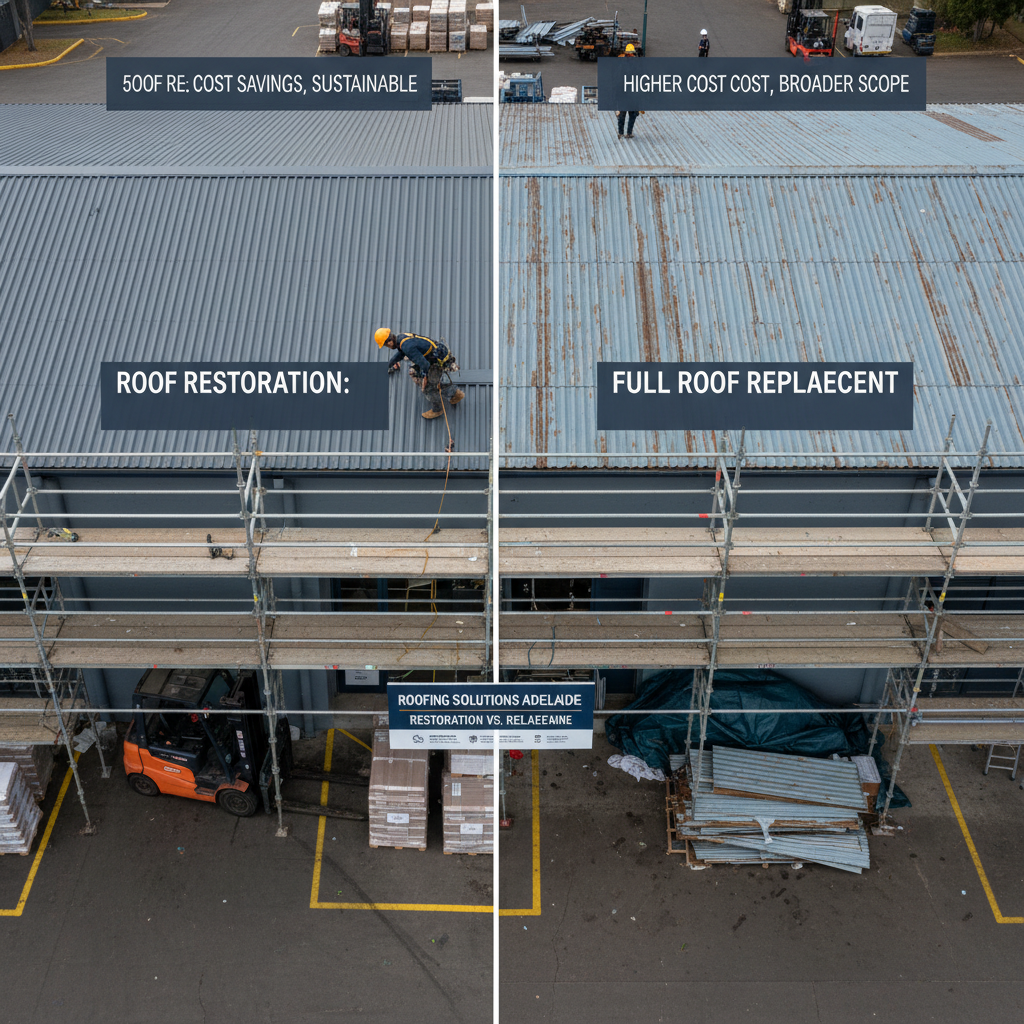
Roof restoration cost is typically a fraction of the cost of replacing the entire roof. Cost savings are driven by less labor, fewer materials, and less debris removal. Restoration often allows you to delay or entirely avoid the high cost of replacing. Full roof replacement incurs greater labor costs, disposal cost for old materials, and new products like advanced metal roofing or single-ply membranes. Upfront costs for replacement can be high, particularly for large commercial building or if the existing structure has structural damage. Ongoing annual roof maintenance program, including gutter cleaning and maintenance practices, supports long-term asset performance post-restoration. Restoration, enhanced with UV reflective or cool roof coatings, also delivers energy savings and lowers energy bills. These cool roof coatings improve energy efficiency by minimizing heat transfer. Fluid-applied systems and spray foam roofing can address insulation issues and extend the life of the roof. Restoration is a clear winner for cost savings and sustainability performance when the roof is generally sound but needs renewal.
Benefits and Limitations
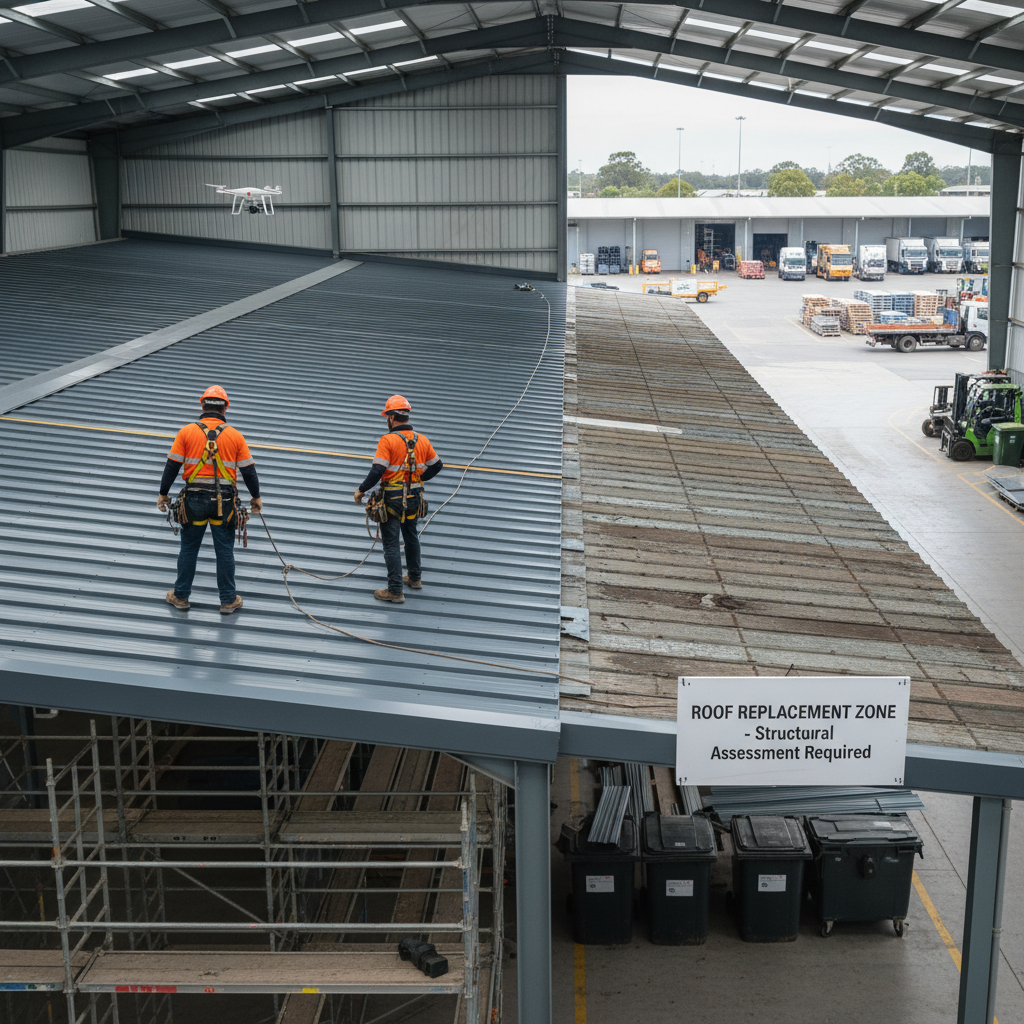
Roof restoration carries significant advantages:
– Minimises waste: Less landfill and lower ecological footprint.
– Extends asset life: Avoids premature replacement.
– Quick turnaround: Shorter downtime for your business.
– Promotes environmental sustainability: Supports green building initiatives and reduces carbon footprint.
Protective coatings like silicone coating systems, acrylic coating systems or reflective roof coatings shield against UV radiation, storm damage, hail storms, and water damage. Annual roof maintenance program after restoration ensures ongoing performance, catching early roofing problems, and extending longevity. However, restoration has its limits. Severe structural integrity loss, major roof failure, extensive roof leaks, and chronic ponding water or water infiltration may render restoration temporary at best. In such cases, roof replacement is necessary. Replacement offers a new start with up-to-date materials, more robust structural integrity, and industry-leading warranties, but at higher upfront cost and longer installation. Making the right choice depends on a thorough roof inspection and professional advice.
Practical Scenarios, Case Studies, and Decision-Making Guide
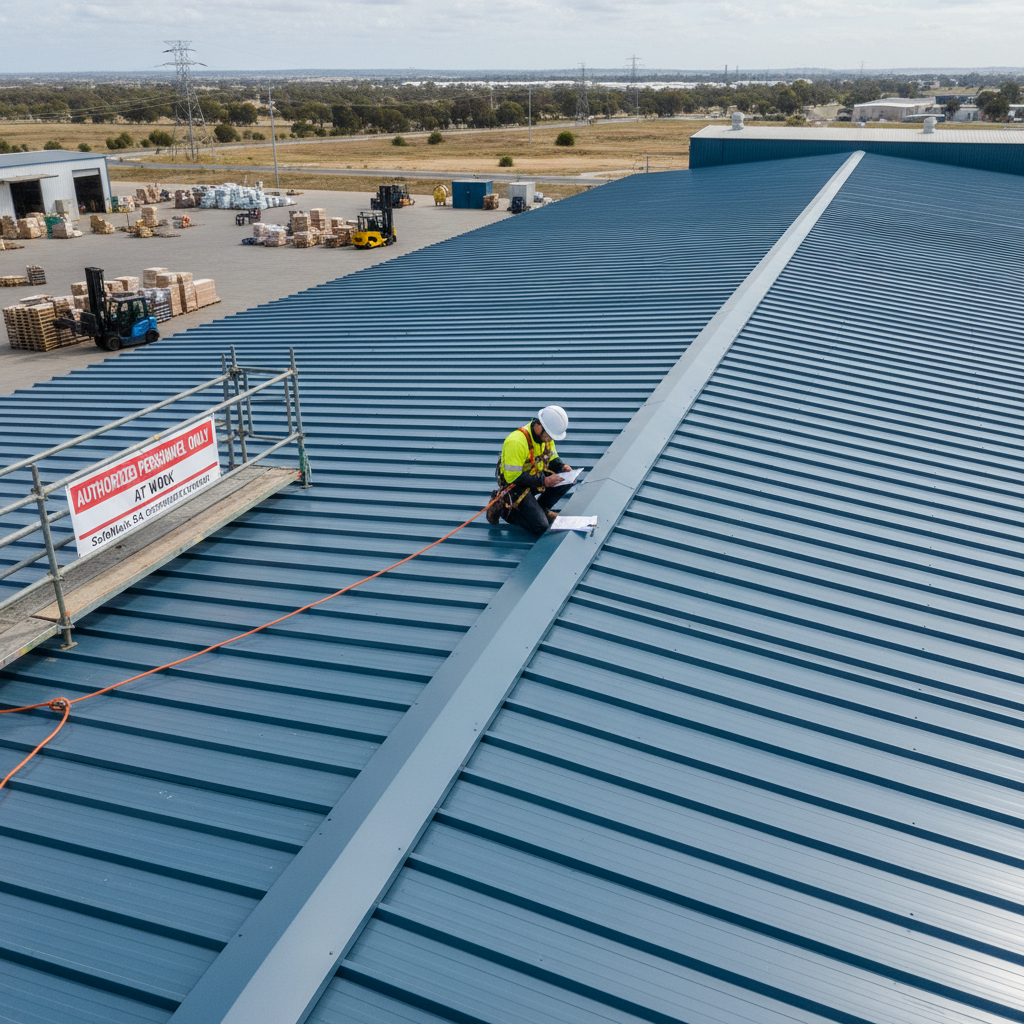
Choose restoration if the commercial roof is aging but structurally sound, shows minor leaks or mild water damage, or presents maintenance issues like moss and algae growth. Surface issues, minor insulation breakdowns, or worn coatings often suit a roof coating or fluid-applied solution. For full replacement, trigger points include significant storm damage, hail storm impact, persistent leaks even after repairs, or major structural damage to decking or flashings. When dealing with ongoing water infiltration or energy bills rising due to poor insulation, a new metal roof with modern insulation and a protective coating system may be required. Case studies within SA show commercial buildings restored with monolithic commercial roof coatings, reflective coatings, or high-performance silicone coatings achieving notable energy savings, cost savings, and improved sustainability performance. Each scenario starts with a roof inspection or roof assessment from an experienced roofing contractor, helping you make informed, data-driven choices. Reroof Surgeon, for example, combines in-depth building envelope reviews with honest advice and transparent labor costs. Use a decision-making checklist: inspect for roof leaks, assess structural integrity, calculate roof restoration cost, consider energy efficiency goals, and compare to full replacement cost.
Book your professional roof assessment with Reroof Surgeon today to maximize value and longevity. Think about roof restoration cost, sustainability, and future plans. Consider all technical, budget, and environmental aspects. Get expert input before deciding. Smart decisions start with great information. Ready to act? Contact us for tailored advice or explore further resources to inform your next steps.